Child Safety

Child Safety

CHILD SAFETY AT ST PAUL’S SCHOOL AND EARLY LEARNING CENTRE

St Paul’s School is committed to creating and maintaining a child safe environment where children and young people are protected, respected and supported to thrive.

We are a child safe organisation, with systems, policies and practices in place to promote children’s safety and wellbeing, prevent harm, and respond appropriately to concerns. Child safety is embedded in our leadership, culture and everyday practice, and is a shared responsibility across our whole school community.

We recognise that cultural safety is an integral part of child safety. We are committed to creating environments where all children feel welcome, respected and valued, and where their identity, culture and lived experience are acknowledged and supported. This includes upholding the right of Aboriginal and Torres Strait Islander children to be culturally safe.

Our approach aligns with Queensland’s 10 Child Safe Standards and the Universal Principle, as required under the Child Safe Organisations Act 2024, and with the Anglican Schools Commission’s Child Safe Anglican Education Policy and Procedures.

Clear, child-focused processes are in place so that concerns about child safety can be raised, listened to and responded to appropriately.

OUR COMMITMENT TO CHILD SAFETY

St Paul’s School and Early Learning Centre are committed to promoting the safety, wellbeing and best interests of children, and to preventing, detecting and responding to child harm.

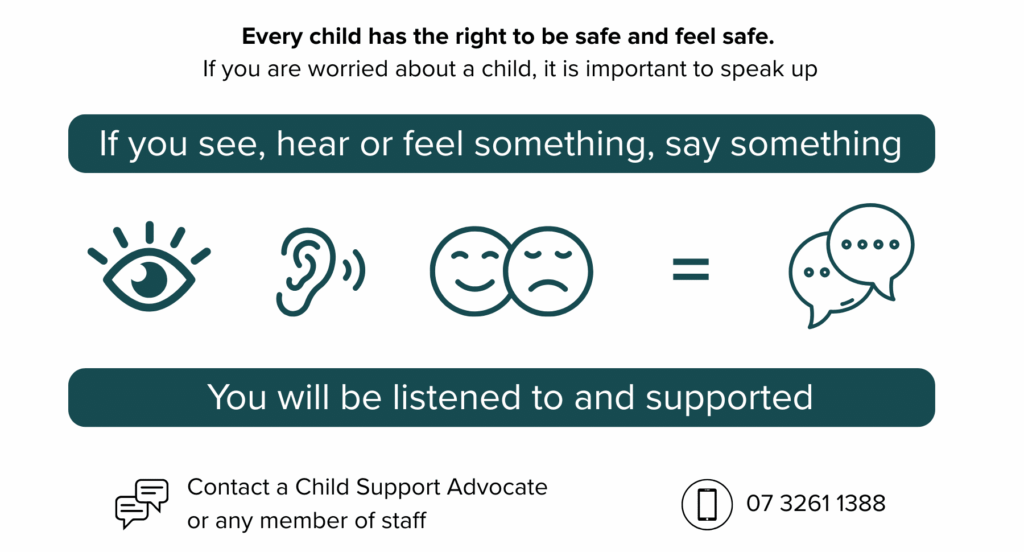
Every child has the right to be safe and feel safe.


AS ANGLICAN CHILD SAFE ORGANISATIONS, WE COMMIT TO:

  • Implementing Queensland’s 10 Child Safe Standards and the Universal Principle.
  • Operating by Gospel values, which emphasise service, inclusivity, integrity, character, dignity, compassion, and justice.
  • Providing children with exceptional pastoral care.
  • Providing care that is physically, emotionally, psychologically and culturally safe.
  • Taking all reasonable steps to protect children from exposure to harm.
  • Empowering children to participate in decisions that affect them.
  • Educating children about who to approach if they feel unsafe, or have concerns.
  • Instructing our community members on how to respond to complaints, concerns, and breaches of our conduct expectations.
  • Maintaining effective processes for responding to concerns of child harm.
  • Listening, learning, and seeking to improve

SPEAKING UP ABOUT CHILD SAFETY

We encourage anyone in our community, including students, parents, carers, staff, volunteers, visitors and the public, to speak up if they are worried about a child’s safety or wellbeing.

Sign up for our e-news

  • This field is for validation purposes and should be left unchanged.